Lifecycle · Bhawani Insights
The casting that dies at year four.
Why lowest landed cost is the most expensive number in heavy-casting procurement — and the four questions that separate a 4-year casting from a 10-year one.
Every heavy-casting tender carries one number that gets circled: the landed price per tonne. It is the easiest number to compare, the easiest to defend in a procurement review, and — on critical castings — the easiest to be wrong about.
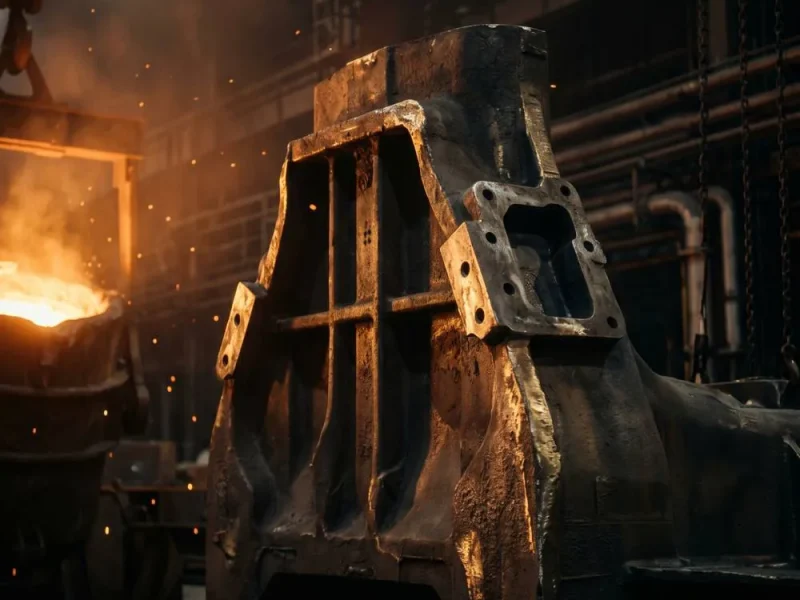
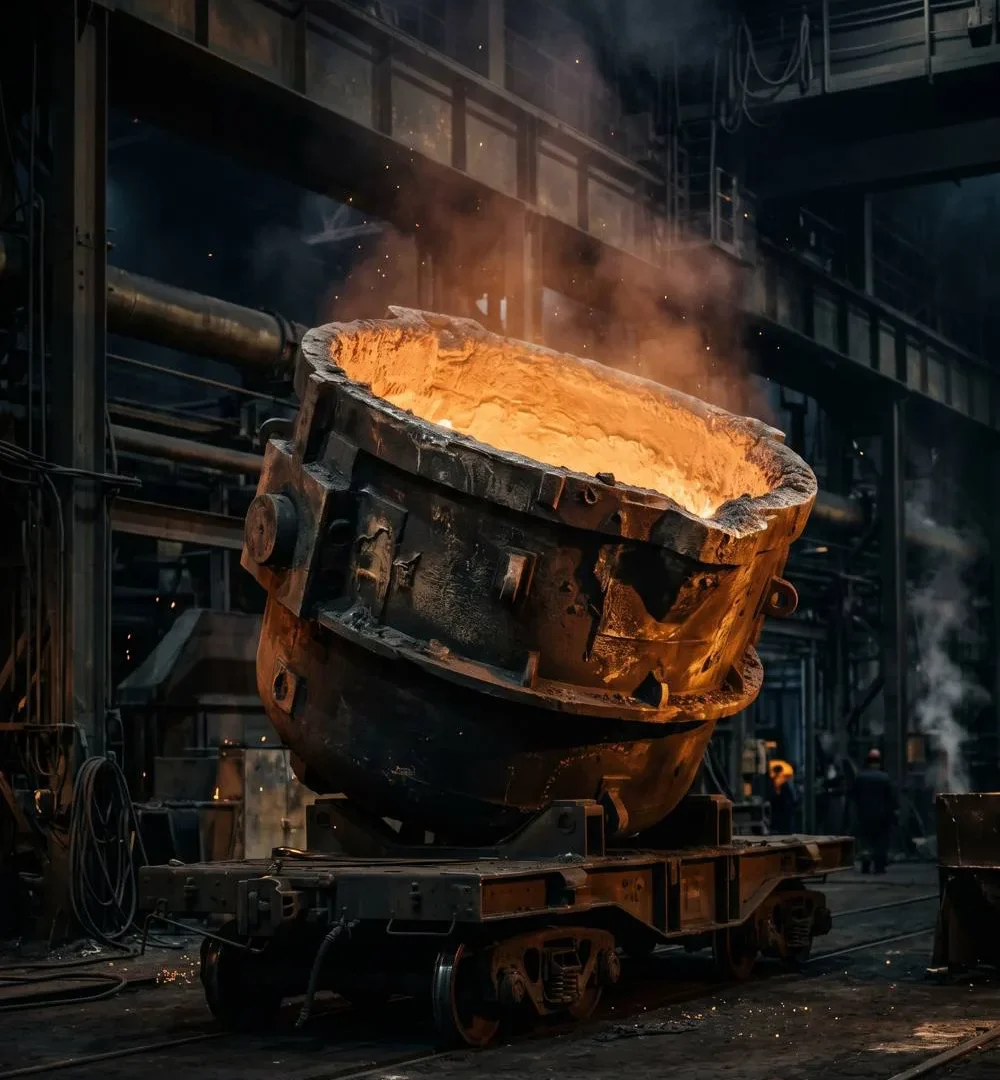
A slag pot, a mill housing, a kiln tyre is not bought once. It is bought, installed, run for a number of campaigns, and then — at some point — it fails or is retired. The real cost of that casting is the purchase price divided by the years of service it delivers. A pot that costs 20% less but retires at year four instead of year ten hasn’t saved you 20%. It has cost you roughly 50% more per year of service — before you count the downtime.
The invisible line items
When a campaign-critical casting fails early, the replacement order is the visible cost. The invisible ones are larger: unplanned downtime on a line that may run thousands of tonnes a day, the safety review that follows any failure near molten metal, the insurance recalibration, and the scramble to source a replacement against a lead time you didn’t plan for.
A casting that meets its dimensional check and dies at year four is a failed casting.
None of those costs appear in the tender. All of them are decided, quietly, at the metallurgy stage — long before the casting is poured.
The four questions that change the casting
Before comparing price per tonne, a buyer of critical castings can ask four questions that move the decision from procurement to engineering:
1. What is the target service life, in campaigns — not years? A casting specified to a load and thermal cycle will outlast one specified to a drawing alone.
2. Who is accountable when it fails — and can you reach them? An imported casting six time zones away has a different failure-response profile to one cast five hours from your plant by the family whose name is on the gate.
3. Was the metallurgy matched to the operating environment, or to the lowest-cost grade that passes the spec? These are not the same casting.
4. Did anyone tell you your drawing was wrong? The most valuable thing a foundry can do before quoting is challenge the specification. Silence at this stage is not a saving.
Cost-per-tonne, not line price
The Bhawani position is simple, and it is the reason this foundry was built: the only honest measure of a heavy casting is cost per tonne of service delivered over its life. Everything we do — vertical integration, in-house heat treatment, a metallurgy lab that signs every test certificate, a fourth-generation engineer accountable for the result — exists to move that number, not the line price.
If you are weighing a heavy-casting decision, send us the drawing and the operating conditions. We’ll tell you what to ask next — before anyone talks price.